





The Roof Claim Process with Homeowners Insurance in NJ Explained
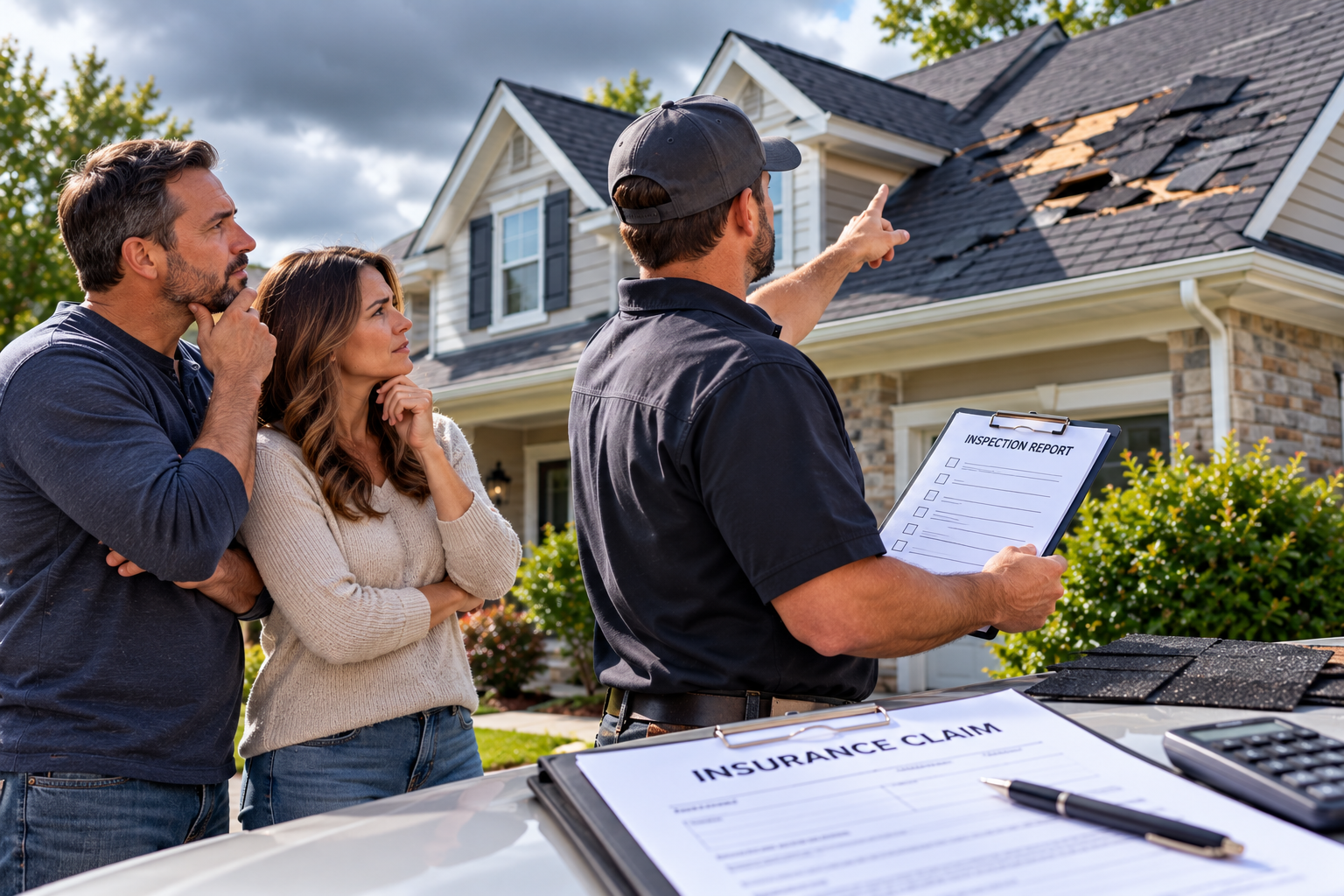
A summer storm strikes, and in the morning you see your shingles spread around the yard, soft spot on the ceiling or new stain on it. If you face this situation, you are not the only one – high winds, hail and falling branches damage the roofs of NJ homes each storm season. And knowing about the homeowners insurance roof claim process can help you to deal with the situation effectively.
The guide below explains what a roof claim consists of, when the damages can be covered by insurance and what steps New Jersey homeowners usually take when dealing with the claim. It is not aimed to promise certain outcomes as each insurance policy and claim is different.

What Is the Roof Claim Process with Homeowners Insurance?
The roof claim process with homeowners insurance is the set of actions that homeowners have to take in order to report to their insurance company about the damages of their roof and ask for financial compensation for repairs or replacement according to their policy.
Simply said, it is a request of yours asking your insurance company to inspect the damages, compare them to your policy and find out what (if anything) is covered according to your contract.
Usually, homeowners think about making a roof claim after a storm, hail, high winds, or a falling branch cause visible or potential roof damage.
Whether a specific claim will be covered or not depends on several things:
- The cause of the damages
- The specific policy you have (language of your policy and its exclusions)
- The deductible amount
- The condition of your roof at the moment of loss
- Documentation
It is important to know that not every roof damage is covered. Every time when the question of coverage arises, homeowners should read their policy or consult with their agents because every insurance policy is different.
When Does the Homeowners Insurance Cover Roof Damage?
Homeowners insurance can cover roof damages that were caused by sudden, accidental incidents, however, coverage depends entirely on the terms of your insurance policy.
Some cases of roof damage that homeowners wonder whether they are covered or not:
- Wind damages – missing, lifted, or cracked shingles because of wind storm, in case when your policy allows to cover such type of losses
- Hail damages – hail stones causing damage to shingles, granules or flashing are considered to be a part of a hail damage roof claim
- Damage from falling trees or branches – this is another popular reason for New Jersey homeowners to call their insurance company
- Other storm-related damages – depending on the specifics of your policy, storm-related damages can be claimed
Also, there are cases when coverage is less probable or even excluded from the list of risks covered by policy completely:
- Regular roof wear and tear is not usually covered because the insurance products are created for sudden, accidental losses, not gradual deterioration
- Poor maintenance of the roof can have an impact on the outcome of the claim if the adjuster finds that your damages were caused by it
- Pre-existing damages that cause questions whether the damage is a result of the latest incident or not
- Flood damage – standard home insurance policies typically exclude the flood damage from coverage, while this type of damage is covered by National Flood Insurance Program or by private flood insurance
Every insurance policy is different, so this information should be considered as general and not guaranteeing that your damage is covered.
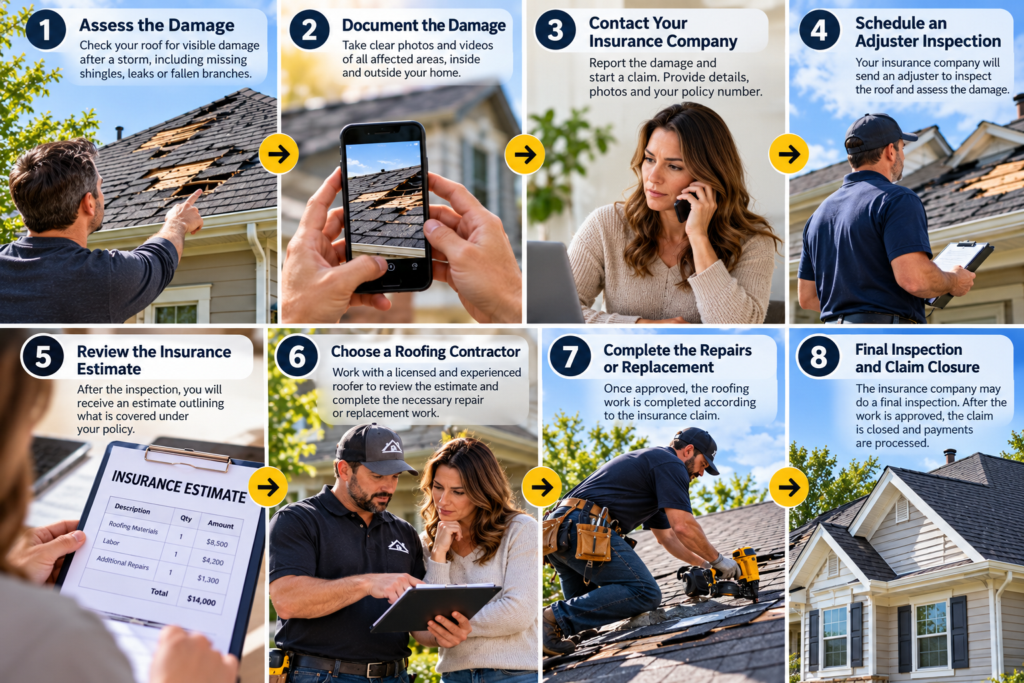
Step-by-Step Roof Insurance Claim Process in NJ
Step 1. Inspect the Roof Safely After the Damage
Safety is the first priority. You should not climb the roof after the damage especially if it happened during a storm because wet surface increases the risk of a fall. In most cases, a visual inspection from the ground or photos made with a zoom lens are enough at this stage.
Step 2. Document the Damages
The documentation will support your claim and help the insurance company to understand what happens. You should try to make:
- Photos or videos of roof damage
- Photos or videos of water spots, leaks, or damaged ceilings
- Photos of damaged personal items
- The date and time of the storm or the event that caused damage (if you know it)
- Receipts for all temporary expenses made during the incident
Step 3. Review Your Homeowners Insurance Policy
It is a good idea to do it before calling the insurance company. Check your policy and learn about your coverage limits, deductible and special wind or hail provisions. This knowledge can help you to continue the roof insurance claim process easily.
Step 4. Contact Your Insurance Company
As soon as possible, inform your insurance company about the situation. According to the guidance of NJDOBI, for the storm-related losses you should contact your agent or insurance company as soon as possible with your policy number and other information about the loss. Timely report helps to keep the claim on the right way and follow the instructions of your insurer.
nj
Step 5. Schedule Insurance Adjuster’s Inspection
After receiving the claim from you, the insurance company will schedule the appointment and send an adjuster to inspect the property. The role of the adjuster is to inspect the damages and determine whether the loss is covered according to your policy.
You should be ready to show the documentation, photos, and contractor’s estimate. Also, it is recommended by the state authorities to be present during the inspection and get the expert opinion about the appraisal made by the company.
Step 6. Get a Professional Roof Inspection
A contractor can make a detailed inspection in order to find both obvious and hidden damages that might occur because of storm, for example, damaged flashing or lost granules that cannot be seen from the ground level. Also, a contractor can estimate the roof repair or replacement needed now.
It is not a guarantee of an approval of the claim but this step gives you the opportunity to see the condition of the roof from the professional point of view.
Step 7. Compare the Damage Assessment and Repair Estimate
Sometimes there is a difference between an estimate of the insurance company and a contractor’s estimate due to different scope of work, materials prices, or code requirements, for example. If you notice the difference, you can discuss it with your insurer and provide additional documentation such as photos, measurements or a written estimate.
Step 8. Make Approved Repairs
Once the claim is approved, you should hire a contractor and make the repairs. Save the copies of invoices, receipts, warranty certificates, and any other documents related to the work made in order to protect yourself in case of possible questions in the future.
What Does a Roof Insurance Adjuster Look For?
The roof inspection made by the insurance adjuster helps the company to evaluate the extent and the cause of reported damage.
During the roof inspection, the adjuster usually examines:
- Damaged, missing, lifted or cracked shingles
- Pattern of wind damage
- Marks or bruising of hail damage
- Flashing damage around chimneys, vents, or skylights
- Penetrations and seals
- Gutters and downspouts
- Fascias and soffits, if relevant
- Water intrusion to the interior
- Other storm-related property damage on the exterior
It is important to note that the examination done by the adjuster is an evaluation, not a verdict. The insurance company takes into account the findings of the adjuster together with the language of your insurance policy to make a decision and sometimes this decision can be discussed or even changed if new information appears.
Common Mistakes to Avoid During a Roof Insurance Claim
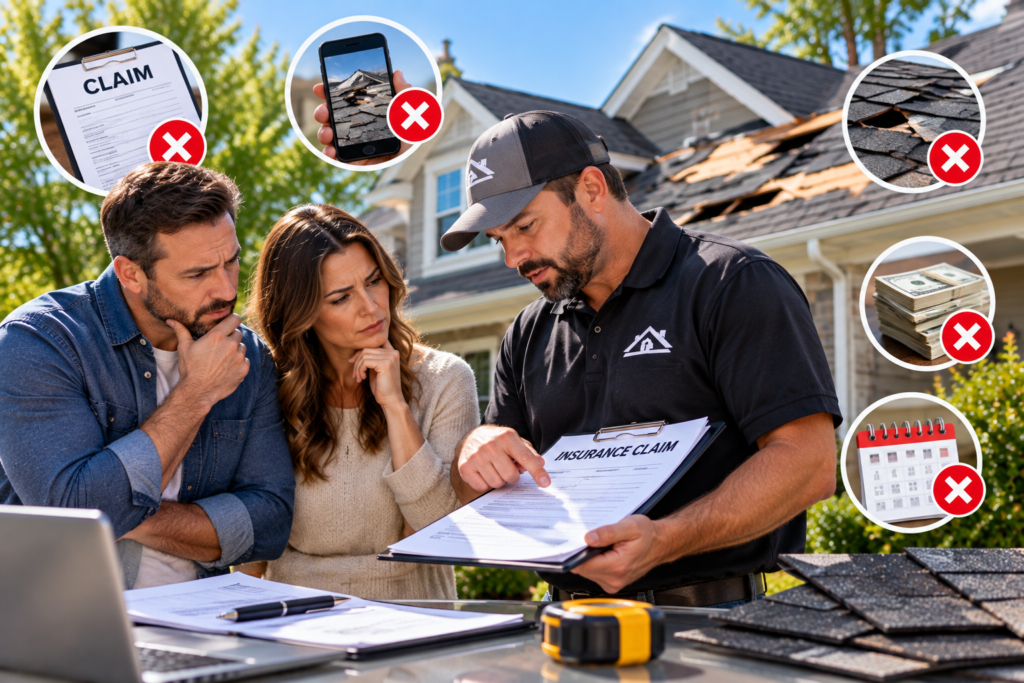
Here are some mistakes you can make during the roof claim process and it would be better to avoid them:
- Reporting the damage to your insurance company too late
- Not photographing or making a video of damages before cleanup
- Making any permanent repairs before the inspection when it is possible to avoid it
- Omitting temporary measures like tarping to prevent the additional damages
- Throwing away damaged materials before the insurance company says you can do that
- Believing that every roof damage is automatically covered by insurance
- Hiring a contractor without checking his licensing, insurance, and references
- Sign any contract or document without thoroughly understanding it
- Making large payments to contractors before agreeing on them in writing
- Taking the insurance company’s estimate as automatically final one
Avoiding these mistakes is not a guarantee of the positive result but it can help you to avoid difficulties in the process.
How Can a Roofing Contractor Help With an Insurance Roof Claim?
-
A roofing contractor can be your consultant during the roof claim process, however, he is not a substitute for your insurance company or lawyer.
At RG Home Services, this type of assistance usually consists of:
- Detailed inspection of the roof in order to find storm-related damage
- Documenting the damages with photos and measurements
- Estimating the damages in a written form
- Explaining roof terminology and scope of work to the homeowner in a clear manner
- Explain to the homeowner the scope of work that a proper, code-compliant repair should contain
You should understand that no roofing company can guarantee the approval of a claim or a specific payment or a full roof replacement. The contractor can help you to know everything about the roof repairs needed and it is a very important thing for talking with the insurance company.
For homeowners who want to start the process of insurance roof claim, the first step usually is the roof inspection service.
What to Do if the Insurance Company Denies the Claim or Provides Wrong Estimate?
If you face the denial of your claim or wrong estimate, there are some non-confrontational ways of solving the situation that you can use.
First of all, you should carefully examine the explanation of the decision and after that:
- Ask the insurance company specific questions about the way they made their decision
- Provide the additional documentation such as photos, measurements, or contractor’s written estimate
- Talk directly with the adjuster or your insurer
- Turn to the licensed public adjuster or lawyer for further consultation
If the disagreement is not solved, you can contact New Jersey Department of Banking and Insurance – they can help you with consumer assistance. If you and your insurer are not able to come to an agreement about the decision of the company, you can contact the Consumer Hotline of this department or visit the Consumer Assistance page on its website. This information is general and it is not a legal or insurance consultation for your specific case. NJ
How Long Does a Roof Insurance Claim Take in NJ?
There is no exact timeframe for the roof insurance claim process – it can take from several weeks to longer depending on several factors.
Factors affecting the time of the claim process:
- Severity and extent of the damage
- The procedure of your insurance company
- Availability of the adjuster, especially after storm
- The speed of providing documentation
- Weather conditions influencing inspections and repairs
- Complexity of the claim and repair scope
That is why the best option for getting this information is to ask your insurance company.
Roof Insurance Claim vs. Roof Repair Paying on Your Own
Not every roof repair needs to be an insurance roof claim – some homeowners prefer to pay for their repair on their own. Some reasons for it can be:
- Deductible amount – if your deductible amount is near the cost of the repair, it makes no sense for you to make a claim.
- Size and severity of damage – bigger and more expensive repair needs a claim.
- Coverage of your policy – some damages are not covered at all in your insurance.
- Cost of repairs – in order to compare the cost of repairs with your deductible, you should get the written estimate of repairs.
- Condition of your roof – if your roof is old and needs replacement anyway, it can be covered differently.
- Specific coverage limitations – there are some special provisions for wind, hail, age of roof, etc.
It is a personal decision which you should make considering your financial situation and the extent of damages. There is no universally correct option here.
Why NJ Homeowners Should React Promptly after Storm Damages
Prompt reaction after storm damages is a must in order to reduce further loss of your property and have an effective claim.
Untreated damages of your roof can let water enter your house causing additional damage to the ceilings, insulation, walls and your personal belongings. The documentation becomes impossible when time passes and evidence of the initial damage is disappearing. Also, many insurance policies have the requirements for the timely notification of the loss.
All this information is not intended to scare but just to remind that prompt action is always a good choice.
How do I make a roof insurance claim in NJ?
Start from documenting your damages with photos, then contact your insurance company or agent as soon as possible with your policy number and information about the event. Your insurance company will help you with specific claim procedure after that.
Does my homeowners insurance cover roof damage from storms?
It depends on your specific policy – many policies include the coverage of such sudden accidents like wind or hail but the exclusions, deductible and the condition of your roof can affect the coverage. It is possible to check your policy or talk to your agent about it.
Will my insurance pay for a new roof?
Yes, sometimes insurance pays for replacement of the whole roof, if there are serious damages that are covered according to your policy, but this is not guaranteed in every case. The age of the roof, prior wear, and other factors can also influence the outcome.
What does an insurance adjuster look for in a roof?
During the roof inspection the adjuster usually looks for the damaged, missing, lifted, or cracked shingles; marks of wind and hail damage, problems with the flashing; water intrusion to the interior.
Should I get a roof inspection before making a claim?
Roof inspection can help you to learn about the extent of damage and document it before contacting your insurance company. It does not replace the inspection of the adjuster but provides useful information for you.
Does homeowners insurance cover hail damage to roof?
Depending on your policy, deductible amount and wind/hail provision your hail damage to the roof can be covered, however, not every hail contact with roof causes insurance eligible damages, that is why the professional assessment is needed.
How long does a roof insurance claim take?
Depending on the severity of damages, availability of the adjuster and many other factors, the claim can be finished in a few weeks or longer.
