


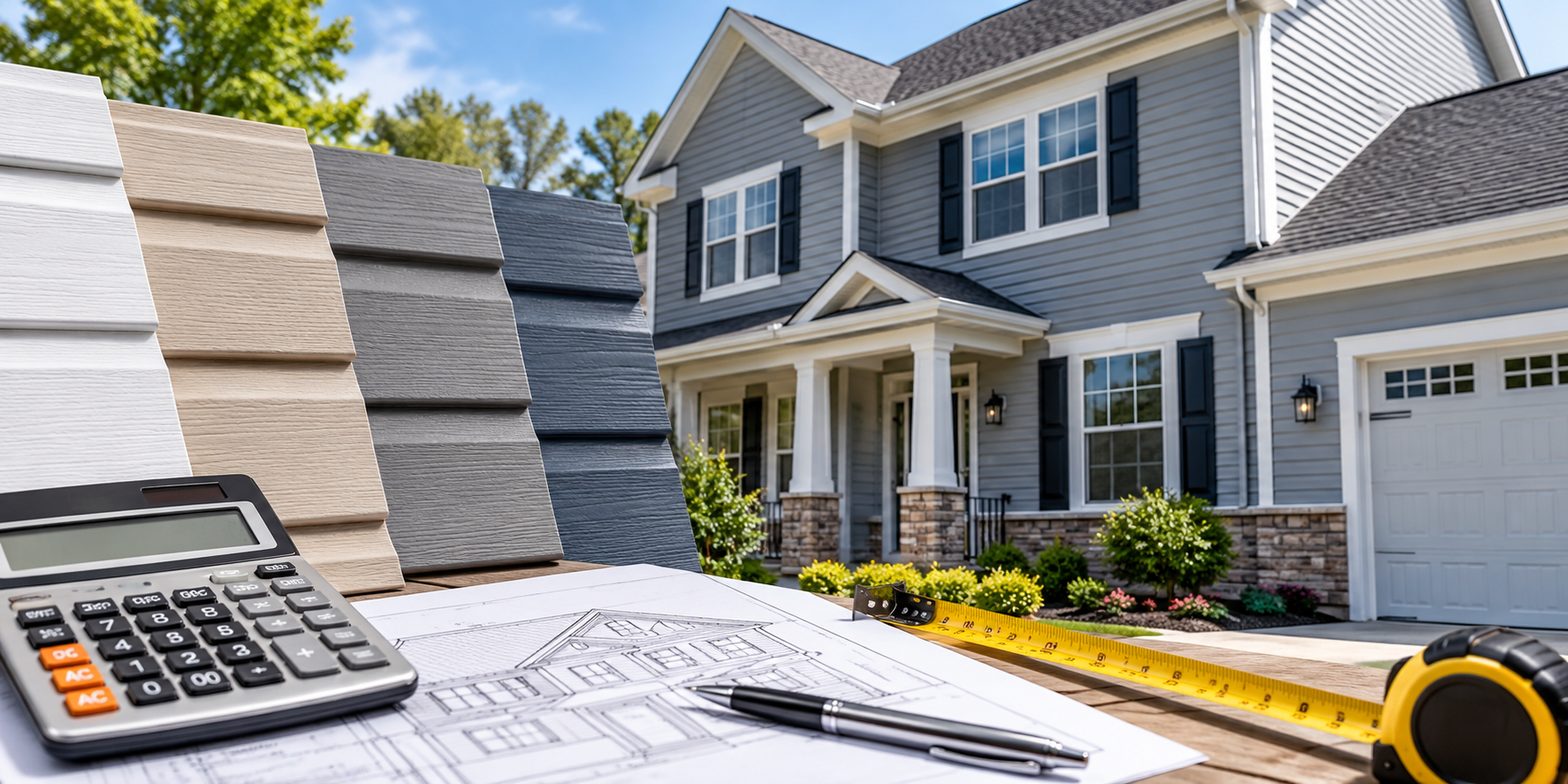
How Much Does Vinyl Siding Cost in New Jersey?
Vinyl Siding Installed Price in NJ – How Much?
On average, vinyl siding prices in New Jersey range between $5-$12 per sq. ft., which means that for a 2,000 sq. ft. home, you will be paying $10,000-$24,000. This is an approximate price that is dependent on other factors.
The siding job can be one of the bigger exterior projects you undertake in NJ, and the prices quoted on the Internet will have very big differences. The reason for this is that there are different types of siding projects that need to be completed.
In this guide, we look at what cost ranges there are, factors that increase or decrease the price of the project, information about NJ contractors and permits, and what to look for when comparing estimates.
DEFINITION Vinyl Siding is a kind of exterior siding made from polyvinyl chloride (PVC), which comes in different styles such as horizontal paneling, shakes, and vertical siding and is known to have low maintenance as well as an economical price compared to other options. |
Vinyl Siding Cost in New Jersey: Typical Ranges
Item | Estimated range |
|---|---|
Installed cost per square foot | $5 to $12 |
Installed cost per “square” (100 sq ft) | $500 to $1,200 |
Material only (standard vinyl) | Roughly $2 to $5 per sq ft |
Insulated vinyl (add-on) | Often $1 to $3 more per sq ft |
Removal and disposal of old siding | Often $1 to $2 per sq ft, sometimes bundled |
Wood or sheathing repair | Priced as needed after inspection |
⚠ Confirm before publishing They are market estimates calculated using cost guides of different countries and regions that had conflicting information, hence the wide range of figures. They are not prices for services provided by R&G Home Services. Remove or replace the figures in the estimates with those of R&G, before finalizing the article. Remember to update the year in the title and slug. |
What It Costs by Home Size
Siding cost is based on the area of the walls and not the floor space. The area of the walls is determined by the number of stories, the style of the roof and the number of windows and doors that the house has. The examples provided below are for 2,000 square feet of siding.
Wall area to side | Lower estimate | Higher estimate |
|---|---|---|
1,200 sq ft (small ranch or cape) | $6,000 | $14,400 |
2,000 sq ft (typical two-story) | $10,000 | $24,000 |
3,000 sq ft (large home) | $15,000 | $36,000 |
The calculations made above are based on a range of $5 to $12 per square foot. The only way to determine the wall space is by getting a professional measurement.
What Drives the Price
Factor | Effect on cost |
|---|---|
Siding grade and thickness | Thicker panels and premium lines cost more and resist damage better |
Insulated vs standard vinyl | Foam-backed panels add cost but improve rigidity and can reduce heat loss |
Number of stories and roofline | Higher walls and complex shapes mean more labor and safety equipment |
Old siding removal | Tear-off and disposal adds labor, especially with multiple layers |
Sheathing and moisture repair | Hidden rot is one of the most common sources of added cost |
Trim, soffit, fascia and gutters | Wrapping trim in aluminum or replacing soffit increases price |
House wrap and flashing | Proper water management behind siding is a major part of quality work |
Windows, doors and details | More openings, corners and gables mean more cutting and fitting |
Season and demand | Spring and fall booking peaks may affect availability and price |
Vinyl Siding vs Other Materials
Material | Relative upfront cost | Maintenance |
|---|---|---|
Vinyl | Lowest of the common options | Low; wash occasionally |
Fiber cement | Higher | Periodic repainting |
Engineered wood | Medium to high | Painting and sealing |
Wood | Medium to high | High; painting and rot control |
Aluminum | Medium | Low; can dent |
The choice of vinyl comes with considerations of cost and ease of maintenance. In cases where appearance takes precedence, or in historic districts where architectural guidelines apply, different material options become necessary.
New Jersey Rules to Know Before You Sign
- Contractor Registration. Contractors performing home improvement and remodeling projects need to be licensed by the Division of Consumer Affairs in New Jersey. Obtain their registration number and confirm.
- Written Contract. New Jersey laws about home improvement stipulate that there must be a written contract that includes the scope of the project, start and finish date, and total cost of the project above a certain minimum cost.
- Permit. Depending on the location and extent of the project, you may require a permit for siding replacement. This is usually required in many locations if the project involves sheathing or framing.
- Lead Paint. Projects involving houses constructed prior to 1978 may involve lead paint removal which falls under EPA regulation.
Historic District. Certain towns in NJ will need to approve change of exterior material.
⚠ Confirm before publishing Check with the NJ Division of Consumer Affairs about the present-day contract policies and the dollar amount required to have a written contract, as well as the HIC number registration of R&G, which should be listed on the page. Confirm permit practices in the primary service area towns of R&G (Montclair and the surrounding area) with the building departments there. |
How to Compare Siding Estimates
- Obtain at least three estimates in writing with the same coverage and products.
- Look for what is covered: tear-away, house wrap, flashing, trim, soffit & fascia, cleaning up, permitting.
- Inquire about the brand, series, and thickness, not just the color.
- Ask how they will deal with any rot and how much they will charge if found.
- Inquire about registration, insurance, and references.
- Review the warranty on the product and the workmanship and by whom it is honored.
- Watch out for a really low bid. They might be skipping the water management aspect.
Ways to Save Without Cutting Quality
- Pair siding with a roof or window job to take advantage of setup and scheduling
- Schedule during the off-season when contractors have more availability
- Pick a medium grade material and spend money on flashings and wrapping
- Make trim work straightforward
- Address moisture problems first; siding won’t fix them
How Long Does Vinyl Siding Last?
- The lifespan of vinyl siding is often many decades for proper installation. Factors that influence longevity include product quality, installation details, sunlight and storm damage. New Jersey’s
- freeze/thaw cycle, summer heat and coastal winds make the quality of installation crucial.
- Mistakes That Should Be Avoided When Selecting Vinyl Siding Contractors
- Price comparisons only. If the contractor does not include the wrap, flash or repairs to the damaged area, then the lowest priced option becomes the most expensive.
- Overlooking what lies behind the siding. Damage discovered midway will change the price of the job.
- Forgetting about the permit. Ask about the necessary permits in your town and who will pull it.
- Comparing apples to oranges. Ensure that you compare jobs with identical scope of work, products, and warranty.
- Failing to confirm the license. Find out about the contractor’s registration in NJ and his/her insurance.
How much does vinyl siding cost in New Jersey?
In New Jersey, the cost of vinyl siding installation is around $5-$12 per square foot, which is $10,000-$24,000 for 2,000 square feet of siding material. It is an approximate estimate. It depends on siding material grade, siding repair, trimming, and removal of existing siding.
How much does it cost to side a 2,000 square foot house?
Approximately, you should budget around $10,000-$24,000 for 2,000 square feet of the siding surface area. Note that the siding square footage is different from floor square footage. Ask your contractor to measure wall area of your property. Additional insulation, trimming, and sheathing repairs increase the total cost.
Is insulated vinyl siding worth the additional cost?
The main advantage of insulated vinyl siding is its foam backing that makes the panels stiffer and more energy-efficient. Usually, it costs a homeowner one dollar or more per square foot of material. Typically, it is profitable for the residents who are going to stay in their property for many years.
Do I need a permit to replace siding in NJ?
In New Jersey, it depends on the specific municipality and the nature of the job. In many cases, the permit is required when there are going to be any changes of sheathing, framing, or other structural elements. Some municipalities require a permit for any cladding replacement.
How do I choose a siding contractor in New Jersey?
You should find a licensed home improvement contractor registered in New Jersey, compare at least three written estimates with the same scope of work, check his references and photos of completed projects, read the contract and warranty. Be cautious when a bid is too low or when you feel pressure to hire the contractor.
How long does vinyl siding last?
If the work was done correctly, vinyl siding usually serves for decades. But its lifetime also depends on material quality, installation, sunlight and weather conditions, and regular maintenance. Usually, the signs of wear such as fading, cracking, and warping are the first ones that appear on the south and west walls of your home.
