





Emergency Roof Repair in New Jersey: How to Handle an Urgent Situation
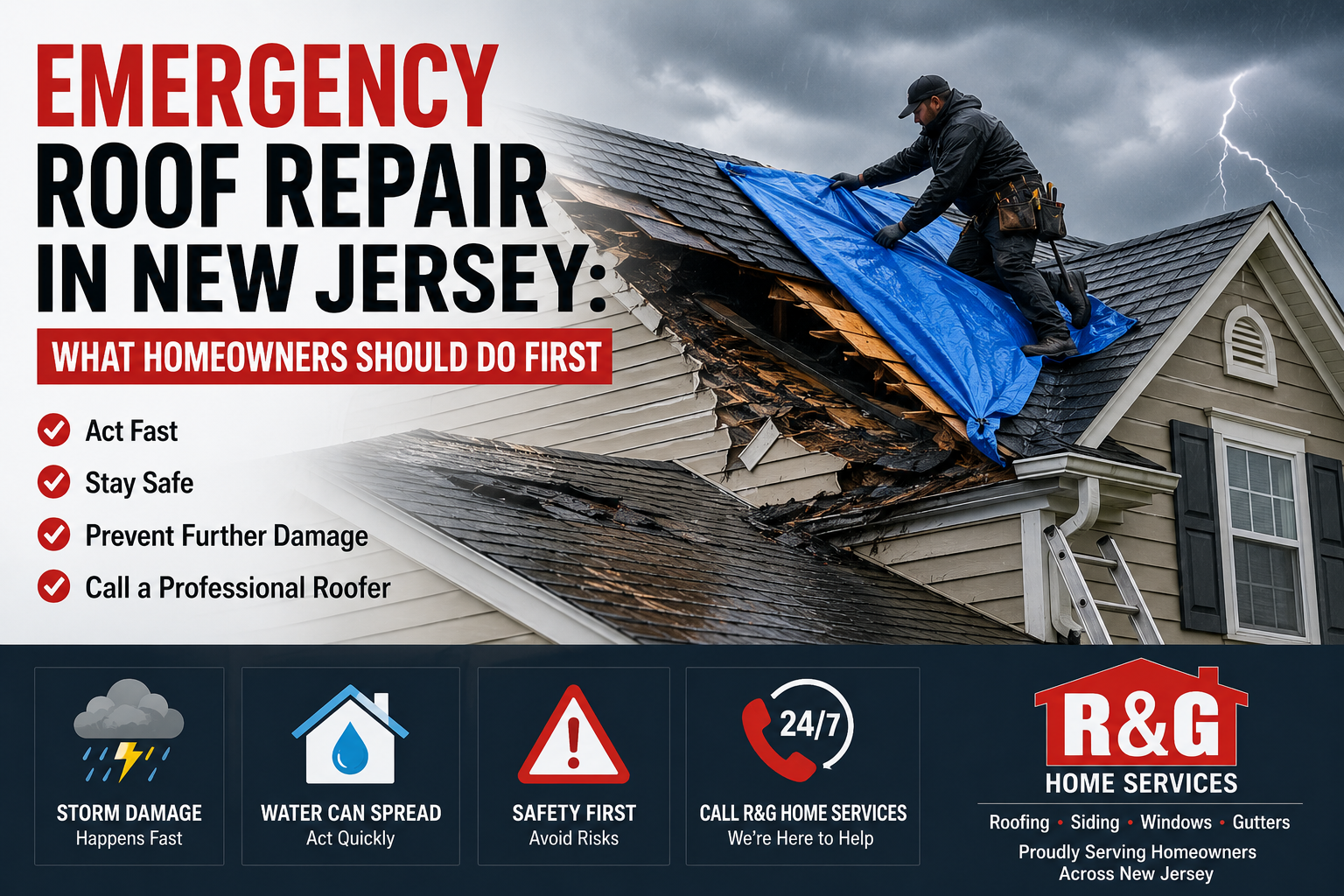
An emergency roofing repair seldom announces itself beforehand. One storm passes through Essex County, a branch falls down over the ridge line and there is a wet stain on the ceiling in the living room. With New Jersey weather conditions featuring heavy rain, strong winds, snow, and freeze-thaw cycles, chances are good you’ll experience some sort of emergency roof repair at some point in your life.
What you do in those first few hours after becoming aware of roof damage can make all the difference between resolving the issue with a repair job or turning a little problem into something bigger, and more costly. This guide will explain when a problem turns into an emergency roofing repair, what you should do right away to protect yourself and your home, what you should never do in such a case, and what a professional roof repair contractor does to handle an emergency.
What is an Emergency Roof Repair in New Jersey?
Not every problem with a roof requires immediate attention. A roofing emergency is, as a rule, a situation where water is getting into the house or the structure of the roof has been compromised.
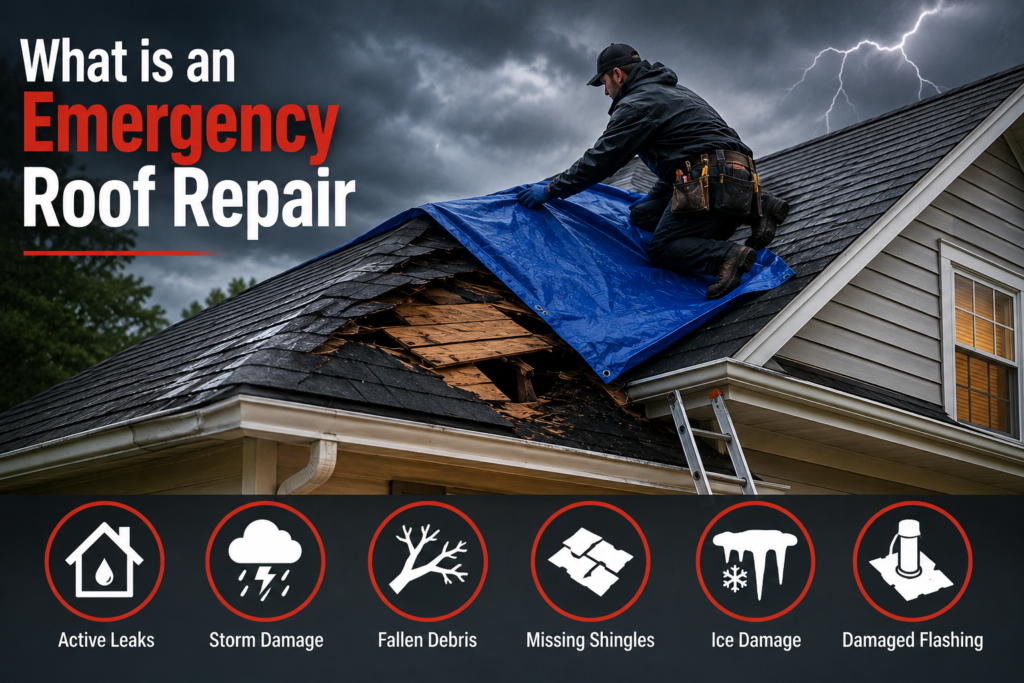
Such situations that can be considered emergencies include:
-
An active leak dripping or streaming into the house
-
Missing or torn off shingles exposing roof decking
-
A fallen tree branch or limb resting on the roof or penetrating through the roof surface
-
A sagging section of the roof or ceiling
-
Growing or spreading water stains
-
Opening in the roofline caused by a storm or strong winds
Situations That Are Usually Not Emergencies
There is damage to your roof that is worth recording and scheduling a repair, but doesn’t require an urgent action. These include:
-
Granule loss noticed in the gutter
-
One or two missing shingles with no visible interior leaks
-
Light cosmetic damage, such as color fading or curling of the edges of the shingles
-
Softness noticed during a routine inspection, without any leaks
If you aren’t sure whether your case is an emergency or not, booking a same-week roof inspection by a professional contractor is a best option.
Causes of Emergency Roofing Issues in New Jersey
Roofs in New Jersey are exposed to quite a variety of weather conditions throughout the year. Different seasons create different risks.
Heavy rain and thunderstorms
Sudden, heavy downpour is enough to overwhelm gutters and expose weaknesses in flashing, valleys, and seams of your roof that had been slowly failing. A roof that could handle light rains fine may become exposed to an active leak once the fast-moving storm drops a substantial amount of rain in a short period.
Strong winds and fallen branches
Winds and other similar phenomena, such as remnants of coastal storms, can lift shingles at the edges of the roof, peel back ridge caps, or even snap tree branches. There are lots of mature trees in Essex County neighborhoods and the falling branch on the roof is quite a common reason for emergency roof damage.
Snow, ice, and freeze-thaw cycles
Freeze-thaw conditions of New Jersey winters can create a condition called ice dams. They push melted snow back under the shingles causing water to enter the house well after the storm. Such a situation is quite common and the damage it causes usually goes unnoticed for some time.
Aging materials and deferred maintenance
A roof that is approaching the end of its lifespan is more susceptible to a damage during the storm. Brittle, curling, and already cracked shingles are much more likely to suffer during a storm than a roof that is being properly maintained.
What to Do After Finding the Damage to the Roof in the First Place
There are several important steps to take when you discover the damage done to the roof of your home. Here is how you can handle a roofing emergency.
Ensure the safety of the occupants of your house. If there is a branch lying on the roof, visible roof or ceiling sagging, or any other sign that indicates that the ceiling might collapse, move your family members and pets away.
Inspect the roof damage from the inside first. Check for the water stains, leaks, sagging ceilings, and other evidence of interior water damage. This is usually safer than inspecting the roof immediately after the storm.
Limit the water damage. Place buckets, towels, or a tarp on the floor under the leaking area in order to minimize additional damage.
Take photos. Capture the photos of the ceiling stains, exterior damage to the roof, and any fallen debris. The photos can be helpful both to your contractor and the insurance company.
Call a licensed roofing contractor. A roof repair contractor specializing in residential roofs can determine whether the damage needs urgent attention or can wait for 1-2 days.
Notify your insurance company. Most homeowner’s policies cover sudden damages caused by the storm. Photos of the roof damage and contractor’s evaluation will help you make a claim.
How to Minimize the Interior Water Damage in a Safe Way
Once you are sure there is no danger to your family, here are several things you can do while waiting for the roofer to come.
-
Move the furniture, electronic devices, and carpets away from the leaking area
-
Place the bucket or another container under the drip and keep it empty
-
Use towels or old sheets to absorb the water on the floor
-
In case a small area of the ceiling is bulging with accumulated water, it is possible to make a hole in the ceiling to drain it out and prevent the collapse. However, this step should be done only if you can do that without going on the furniture, getting close to light fixtures, or touching the wires — if you are not sure whether this is possible, it is better to let a professional do this task and use buckets to control the drips
-
Open the window slightly in the affected room to facilitate air circulation and minimize the moisture
-
Do not use household fans on the wet ceiling since this will result in the water spreading through the drywall rather than evaporating.
What to Never Do in Case of Emergency Roofing Problem
Some actions may seem to be helping, but in reality, they may exacerbate the situation.
-
Never walk on the roof during or right after the storm. The wet, windy, and icy roof surface creates a high risk of slipping and falling, even when you stay in place briefly to inspect the damage.
-
Never attempt to inspect the roof from a ladder during the high winds or during the lightning. Wait until the conditions are suitable.
-
Never ignore a sagging ceiling. This could be a sign of a considerable water weight or structural stress.
-
Never attempt to apply a sealant, roofing cement, or a tarp yourself in order to fix the problem. The improvised solutions can only cause more harm and hide the damage that needs professional attention.
-
Never delay addressing a visible active leak for several weeks. This delay will result in mold formation, insulation damage, and weak decking.
-
Never think that a small leak causes a small problem. Water travels along the framing members before it reaches the ceiling surface, so the visible stain is not necessary the full extent of the damage.
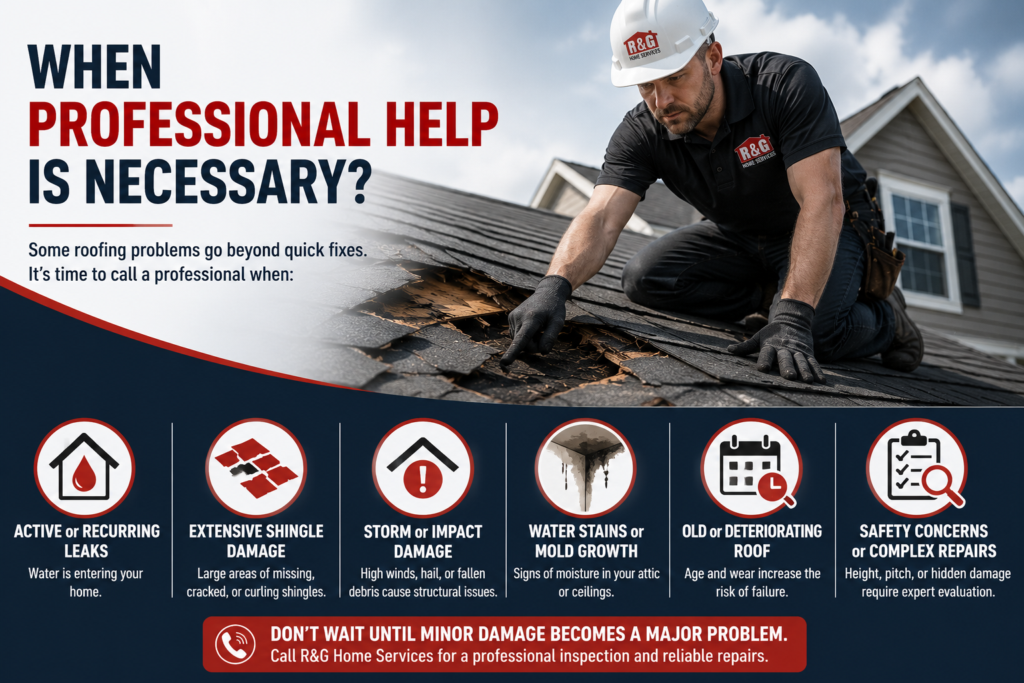
When Professional Help is Necessary?
It is always better to consult a contractor and decide whether you should schedule an inspection immediately. Call a roofer if you see the following:
-
An active water entering your home during the storm or after it
-
A tree branch or other debris on the roof
-
A visible sagging roof or ceiling
-
Exposed roof decking after the strong winds
-
Ice damming creating an interior leak
You should schedule a regular roof inspection if you see the following:
-
Single missing shingle without any interior leak
-
Minor granule loss in the gutter
-
Cosmetic damage not affecting performance
-
General age-related concerns you want to have checked before the next storm season
If you are not sure about your situation, it is okay to contact a roofer and ask him about it. An experienced and reliable emergency roofer NJ homeowners can rely on will be able to answer whether your case is urgent or not.
How a Professional Roof Repair Contractor Works with the Emergency Problems
It is useful to know how the roof repair process goes to understand your expectations from the contractor.
Exterior inspection.
A roofing expert will inspect the roof surface to find any missing or damaged shingles, lifted or torn-off shingles, broken flashing, or any points where water could penetrate the roof.
Interior inspection.
In order to detect an interior water damage, a contractor will examine your attic and ceiling for any moisture presence, water stains, and water traveling along framing.
Moisture and structural inspection.
In case there is a water standing in some area of the roof or the sagging area, a professional will determine whether the decking or the framing has been affected.
Document the findings.
All the pictures and notes made by the contractor will help in developing a plan of action and make a claim to your insurance company.
Decision whether the temporary or a permanent repair is necessary.
If a full repair cannot be carried out due to weather conditions or unavailability of the materials, the contractor may recommend applying a temporary tarp or sealant.
This inspection stage is not only about finding the damage and making necessary repairs, but also about determining the overall state of the roof.
Criteria for Repair vs. Replacement: What Factors Influence the Decision?
Not all roof emergencies result in replacing the roof entirely. Often, a targeted repair will be sufficient. The decision to perform a replacement or a repair usually depends on several factors.
|
Criterion |
Favorable for Repair |
Favorable for Replacement |
|
Age of the roof |
Not very old or midlife |
Very old or approaching the end of the usable life |
|
Extent of the damage |
Localized to a single area or region |
Widespread all over the roof |
|
Condition |
Surrounding shingles and decking are in good condition |
Decking is soft, rotten, or patched multiple times |
|
Pattern of the damage |
Caused by a specific wind or impact event |
Along with pre-existing wear on the roof |
|
Past problems |
First problem in this area |
Recurrent leaks or repairs in this area |
A reputable contractor will inform you clearly whether your roof requires a replacement or a repair and the reason behind his choice.
How to Prevent Future Roofing Emergencies
Even though you cannot predict a storm or a falling branch, there are several preventive measures you can take.
-
Have a roof inspection once a year, or after any major storm
-
Remove any tree branches hanging above or near the roof
-
Clean the gutters regularly to ensure proper drainage, especially before the winter
-
Address any minor damage, such as lifted shingles, to prevent any future leaks
-
Improve insulation and ventilation in the attic to prevent ice dam formation during the winter
-
Save a history of any roof repairs for further reference
Emergency Roof Repair Checklist for NJ Homeowners
Use this checklist next time when your roof becomes damaged suddenly.
-
Ensure the safety of all the occupants and refrain from entering the rooms with damaged ceiling
-
Inspect the damage from the inside before doing any external inspections
-
Collect water in buckets, towels, or tarp
-
Take pictures of interior and exterior damage
-
Contact a licensed roof repair contractor for advice
-
Contact your homeowners’ insurance provider
-
Do not walk on the roof and attempt any repairs yourself
-
Schedule an inspection once the emergency is solved
How R&G Home Services Can Help with Emergency Roof Repair
Being a GAF Master Elite roofing contractor with over 25 years of experience in servicing roofs in Essex County, NJ, we understand how unpredictable New Jersey weather may become. Our team of professionals will evaluate the damage caused by the storm, fallen branch, and active leak and explain to you honestly what kind of repairs are needed. Sometimes, this will be a repair; sometimes – a replacement.
If you have to deal with a roof that has suffered from the recent storm or a fallen branch, you can contact us for an emergency roof repair. In case your roof does not need to be fixed urgently, you may find more information about our roof repair and storm damage services, and get in touch to schedule an inspection.
What constitutes an emergency roof repair?
An emergency roof repair includes any active leaks, fallen branches or other debris on the roof, or a sagging roof. Such issues need immediate attention in order to prevent additional damage to your property.
Is it safe to walk on a roof after storm damage?
Walking on the roof after the storm is not recommended if the surface is wet, icy, or windy. It is safer to hire a professional roof repair contractor who will inspect your roof.
How quickly should storm damage be repaired in New Jersey?
Any active leaks and exposed decking should be addressed as soon as possible – preferably within 24-48 hours in order to minimize additional interior damage. Non-urgent issues such as minor shingle wear can be scheduled within 1-2 weeks.
Is it possible to temporarily cover a roof leak?
Using a bucket to collect the dripping water is fine, but attempting to apply any temporary seals or tarps to the roof yourself is dangerous because of the high fall risk.
Does homeowners' insurance cover emergency roof repair?
Most homeowner’s insurance policies cover emergency roof repairs as a result of a storm, although it depends on individual policy and nature of the damage. Taking pictures of the damage and obtaining contractor’s evaluation will help you to file a claim.
