






Roof Leak Repair in New Jersey: Typical Causes & Next Steps
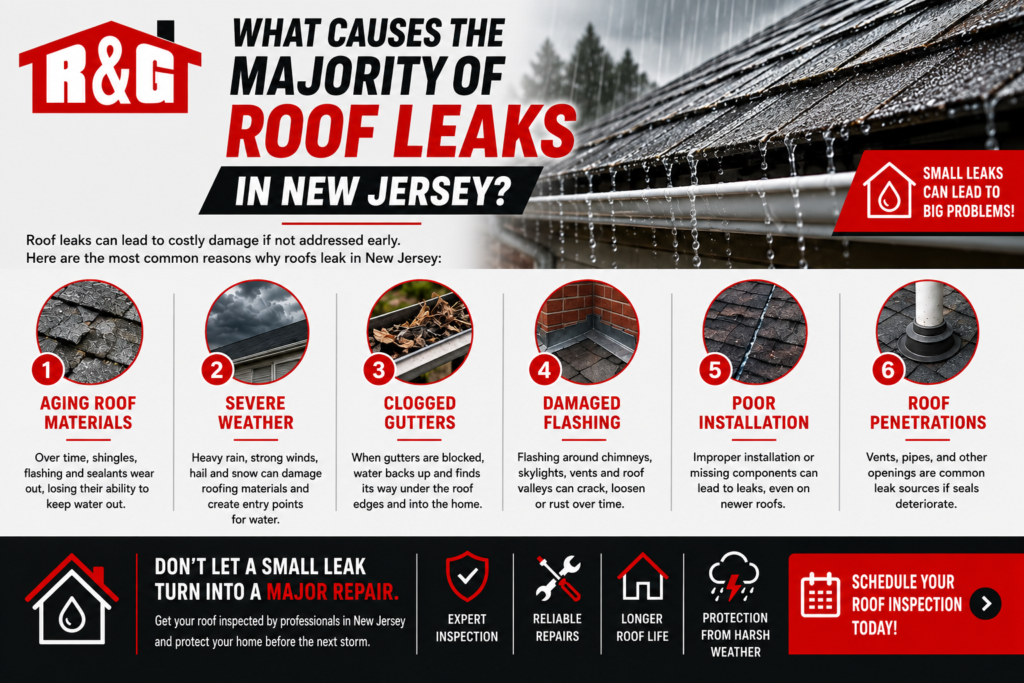
In New Jersey, the vast majority of roof leaks can be traced back to a few common sources – damaged shingles, malfunctioning flashing, clogged gutters or ice dams created during freeze-thaw cycles in winter. What needs to be done next depends completely on identifying the true cause of the problem, as the leak usually starts somewhere else but not from the place where the water is dripping.
Here, we will explain why roofs leak in New Jersey, what leak warning signs to pay attention to, what action needs to be taken once the leakage is detected, what DIY solutions homeowners shouldn’t try and how a roofing contractor traces the true cause of roof leakage and recommends necessary roof repair or replacement.
What Causes the Majority of Roof Leaks in New Jersey?
Roof leakages occur when the roofing system fails in its primary function of shedding water – be it a damaged shingle, faulty sealant or excessive water load.
- Damaged or Missing Shingles
Strong winds, hail or regular aging can lead to lifting, cracking and even removing of the shingles, leaving the underlayment and the decking beneath unprotected. Once shingles are damaged, water will get access to the roof structure through the next rainfall.
- Leaking Flashing around the Roof Penetrations
Flashings are the metal structures which are installed around such features as chimneys, vent pipes, skylights and places where the roof meets the wall. Flashings are among the most common sources of roof leaks as those areas are more prone to movement and mechanical stress compared to the areas covered by the shingles. Additionally, sealants used for securing flashing can dry out and crack over time.
- Ice Dams and Freeze-Thaw Cycles
New Jersey winters provide freeze-thaw cycles during which the ice dams are formed at the edge of the roof. During the winter months, snow melts due to heat losses from the attic, slides down the roof and freezes again at the colder edge. Ice dams prevent water from flowing freely from the roof, pushing it up under the shingles – which is one of the reasons why roof leaks may appear quite some time after the snowfall.
- Clogged or Damaged Gutters
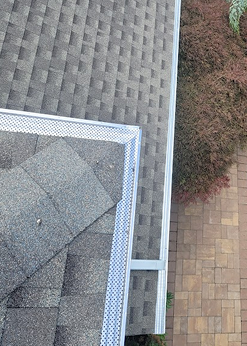
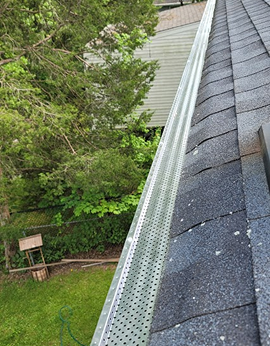
Clogged with leaves and other debris, gutters cannot effectively carry the water away from the roofline and allow water to travel back under the shingles or overflow over the edge and directly onto the fascia.
- Aging Roofing Materials
Age causes shingles to become brittle and ineffective in their water-shedding capabilities. Roofs approaching the end of their life can begin to experience roof leaks during the next heavy rain without any other factors being involved.
- Storm and Wind Damage
Strong winds can blow shingles up, tear them off completely or drive the rain sideways into the roof vents and flashing that is not intended for coping with wind-driven water. A single heavy storm can turn an otherwise watertight roof into the leaking one.
Warning Signs to Watch Out for before a Roof Leak
As soon as homeowners discover warning signs of roof leaks, they can potentially avoid bigger roof repairs by acting in a timely manner. The following are common warning signs of roof leaks in New Jersey homes:
- Water stains and discolorations on the ceilings or the upper part of the walls
- Peeling or bubbling paint near the ceiling line
- Musty or damp smell in the upper rooms or in the attic
- Light shining through the roof boards in the attic
- Damp, matted or discolored insulation in the attic
- Granules found in gutters or around the downspouts
What Should Be Done as Soon as a Leak Is Discovered
Immediate and proper reaction in the first hour after the discovery of a roof leak can save the homeowner a lot of money on roof repair services.
- Contain the water flow. Put a bucket or a similar object underneath the leak point and use rags or towels to protect floor and furniture from dripping.
- Remove items that are in danger of water exposure. Move all items, including furniture and electronic appliances away from the leaking area.
- Inspect the attic for the leaking area, if it is safe to do. Check for wet spots in the attic without stepping on the insulation-covered joists which may be hard to detect visually.
- Take pictures of the ceiling stains, any visible damage and whatever you can see in the attic. This will help your roofing contractor evaluate the damage and support your insurance claim.
- Call a New Jersey roofing contractor who will be able to find out whether the leak needs immediate attention or can be handled in a few days.
- Inform your insurance company if the roof leak was caused by a storm. It is possible that your roof leak can be covered by your insurance policy as it covers sudden damage.
What Homeowners Shouldn't Do While Dealing with the Roof Leak
There are several actions that homeowners tend to take but which can worsen the situation or complicate the diagnosis of the roof leaks.
- Don’t go up on the roof on your own especially if the roof is wet or covered with ice or has a steep pitch. Roofs are slipperier than they seem and the risk of falling from the roof is high.
- Don’t think that the location of the dripping spot is the cause of roof leaks. Water can travel for several feet along the rafters or roof decking before dripping through.
- Don’t use roofing cement or sealant to seal the leak if you don’t know where the water is entering the roof. This will only add additional moisture and postpone the correct roof repair.
- Don’t ignore any roof leaks regardless of their severity as even minor leaks can lead to rotting of the decking, damage to the insulation and formation of mold over time.
- Don’t rely only on the temporary roof repair solutions as they can only stop the water entry but won’t fix the root cause of the problem.
How the Professional Locates the True Cause of Roof Leak
To identify the true cause of a roof leak, an experienced roofer usually follows several steps:
- Interior inspection. Checking the attic for the presence of wet spots, the direction of the water flow and wet insulation helps to narrow down the general area where the leak occurs.
- Visual inspection of the exterior. The contractor inspects shingles, flashings, valleys and roof penetrations in the identified area for the cracks, gaps or uplifted material.
- Tracing up the roof. The reason why water enters the roof is that it flows uphill along the roof decking before it finds a hole and enters through it. Therefore, the true leak point is usually higher on the roof than the leak location in the house.
- Close inspection of the trouble spots. Chimney, skylights, vent boots and roof-to-wall joints are checked closely as leaking flashings in these locations are very common.
- Water testing. In case the source of the roof leak is not clear after the above-mentioned steps, the contractor can conduct a test by running water on the particular area of the roof.
That’s why the homeowners’ idea of the “point where the roof is leaking” may be incorrect.
Repair vs. Replacement: How the Proper Solution Is Found
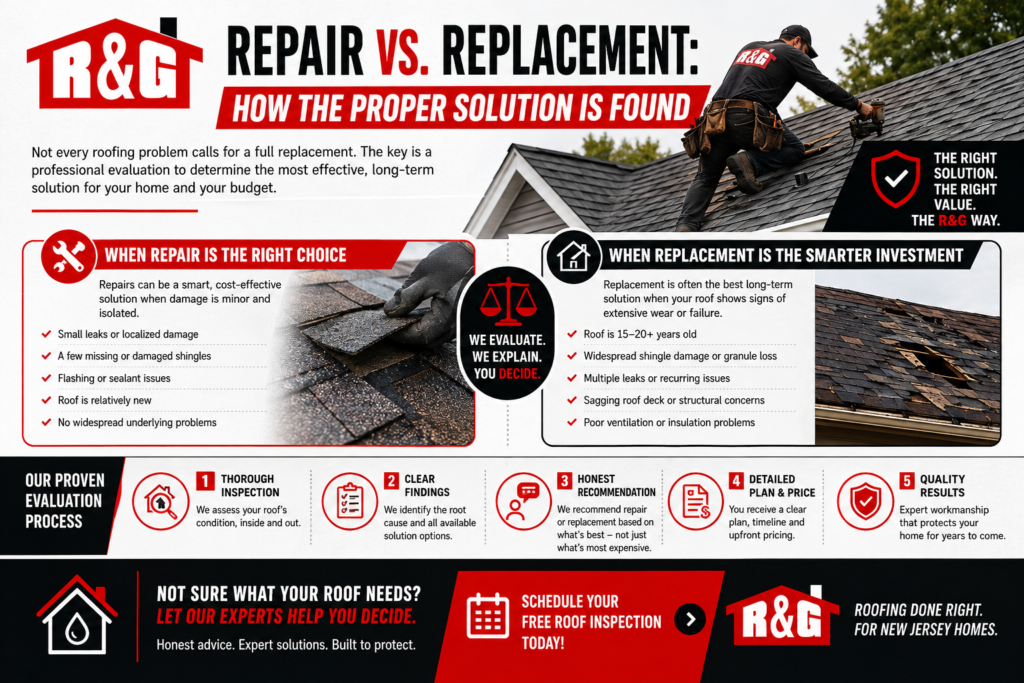
Factor | In Favor of Repair | In Favor of Replacement |
Roof age | Younger or midlife | Older or approaching the end of life |
History of roof leaks | First leak in this area | Leaking in different areas on a regular basis |
Extent of roof damage | Damage is confined to the section of shingles or flashing | Damage is extensive and covers the entire roof surface |
Condition of the roof decking | Decking is solid and undamaged beneath the leak location | Decking is soft, rotted or already patched up |
Pattern of the storm damage | Limited to the particular storm or area | Includes preexisting roof wear together with storm damage |
New Jersey Weather and Roof Leaks: Why It Matters
The roofs in New Jersey encounter a variety of weather conditions throughout the year and each season brings its own threats.
Rainy and stormy weather with heavy rains can flood the gutters and leave weak spots in flashings and aging shingles unprotected. Storm winds, including remnants of coastal storms, can raise shingle edges or drive the rain into vents and joints which are not capable of coping with wind-driven water. In case of snowy and icy weather, the roof leaks are often related to the ice dams, formed during the freeze-thaw cycles – the process when snow begins to melt due to the heat losses from the attic and freezes again at the edge of the roof, creating a ridge of ice and blocking water drainage. Homes with poor attic insulation and ventilation are particularly vulnerable to this type of the problem.
Therefore, New Jersey roofs can be in perfect condition in summer but become prone to certain roof problems when winter weather sets in.
Preventing Future Roof Leaks
Following several simple steps will help to prevent roof leaks in the future.
- Roof inspection at least once a year or right after any stormy weather
- Regular cleaning of the gutters especially in fall so that they could properly drain water in winter
- Trimming the tree branches growing close to the roofline
- Improving the attic insulation and ventilation in order to prevent the formation of ice dams in winter
- Addressing the minor roof issues such as uplifted shingle or loose flashing before they become the leaks
- Keeping records of all the past roof repairs to help the roofer to assess the current roof condition
When to Call a New Jersey Roofing Contractor
Some roof leaks require urgent attention while other cases can wait for the roof inspection.
It’s time to call a professional sooner rather than later in case there are:
- Active roof leaks and growing ceiling stains
- Visible daylight through the roof boards in the attic
- Missing shingles or exposed decking after the storm
- A recurring roof leak in the same location
Scheduled inspection will do in case:
- Minor amount of shingle granules was found in the gutters
- General wear of the roof needs evaluation before the upcoming storm season
- The roof is approaching the end of its life and there are no leaks yet
How R&G Home Services Can Help
R&G Roofing, Carpentry & Siding has been working on New Jersey residential roofs for over 25 years and understands the local weather patterns causing common roof issues. Being a GAF Master Elite certified roofer, our team will trace the true cause of roof leak before suggesting the roof repair rather than guess-timating from the location of the leak inside the house.
Should there be any active roof leaks, our roof repair and emergency roof repair teams will assess the situation and suggest the next steps. For the leaks related to the winter weather, our services for ice dam removal and gutter repair can be helpful as those are the most common seasonal causes of the roof problems. In case of the storm damage, the storm damage repair team will assist you. Contact us to schedule the inspection.
What are the common reasons of roof leaks in New Jersey?
The most common reasons include damaged or missing shingles, malfunctioning flashing, clogged gutters or ice dams created during freeze-thaw cycles in winter. Aging roofing materials and storm damage are among other roof leak reasons.
How can I find the true cause of my roof leak?
It is unlikely that the leak will occur directly above the actual roof leak point, as water travels up along the rafters and roof decking. An attic inspection along with the exterior check of flashings, valleys and roof penetrations can help in identifying the true cause of the roof leak.
Is it safe for me to go on the roof and check for the leaks?
No, it is generally not recommended, especially if the roof is wet, icy or has a steep pitch. The roofing surface is much more unstable than it seems and a licensed roofer is capable of examining the roof in a safe way.
Does my homeowners insurance policy cover roof leak repair?
Usually, it does for the cases of sudden, storm-related roof damage. However, whether your policy covers roof leaks and how much will depend on the particular policy.
Should I repair the roof leak immediately or not?
Even minor roof leaks need to be addressed in time, otherwise, they can result in rotted decking, damaged insulation and mold. Delaying a roof repair gives the underlying damage more time to spread.
What is the difference between a temporary and permanent roof repair?
The temporary roof repair such as applying a tarp or a similar temporary solution stops the active leak until the roof can be assessed. A permanent roof repair involves addressing the damaged roof material – shingles, flashings or decking.
