


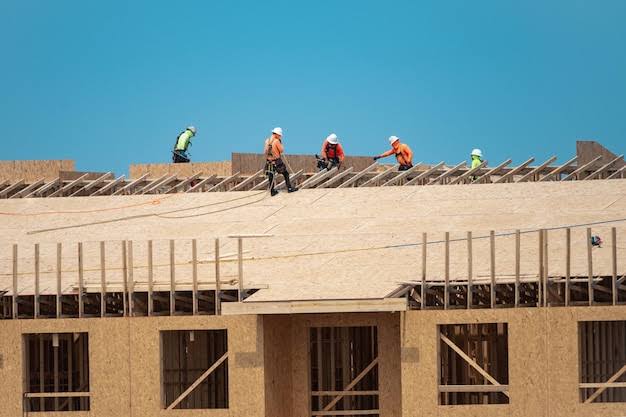
Questions to Ask Before Hiring a Roofing Contractor in NJ
If you have ever typed in roofing contractor near me following a storm, then you know firsthand what the issue is: you end up with dozens or even hundreds of options, half of which are duplicates, and you do not know which one of them is capable of actually working on your roof.
The weather conditions in New Jersey are rather extreme: heavy nor’easter storms, ice storms, hot summer days, and sometimes even remnants of hurricanes. This means that your roof undergoes a lot of wear and tear, and you simply cannot afford to hire an incompetent roofing company.
The guide below will help you understand exactly which questions you have to ask yourself, what the proper answer should be, and what warning signs should make you move on from a certain roofing company when it comes to repairing or replacing your roof in New Jersey.
Why This Decision Matters More Than Most Home Repairs
Unlike a leaky faucet, getting the roof installation or repair wrong leaves you more than out the money for the job itself; you are now facing water damage, mold growth, destroyed insulation, and claims against the homeowner’s insurance policy.
The roof industry is one of the most frequently scammed or poorly done areas of home improvement. The “storm chasers” who drive out-of-state license plates in New Jersey and take your deposit after the big storm are real, and by the time the first drip appears, they are long gone.
Asking the tough questions up front is not just about causing problems for yourself; it is about ensuring you have a proper roof for the next several years.
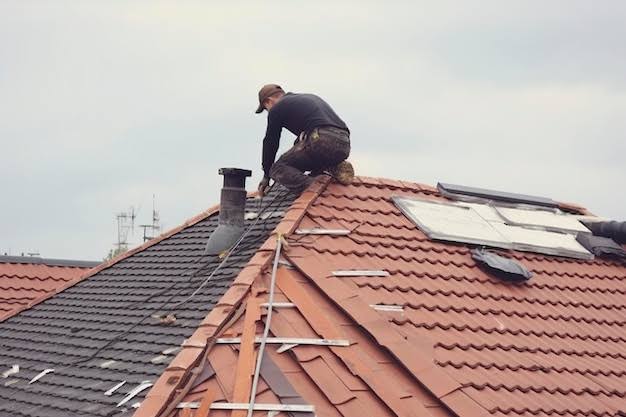
Question 1: Are You Licensed and Insured in New Jersey?
No exceptions here, folks. Home improvement contractors in New Jersey must be licensed by the state’s Division of Consumer Affairs, and the licensed roofing contractor will have no problem providing you with his registration number.
Ask for three things:
Number of HIC license (Home Improvement Contractor). You can check it out on the website of NJ Division of Consumer Affairs.
General liability insurance – in case there is damage to your property during work.
Workers’ compensation insurance – in case one of the workers is injured on your property.
Professional advice: Don’t take their word for it; ask them to email you their insurance certificate. An oral statement that “Yes, we are insured” doesn’t help you at all.
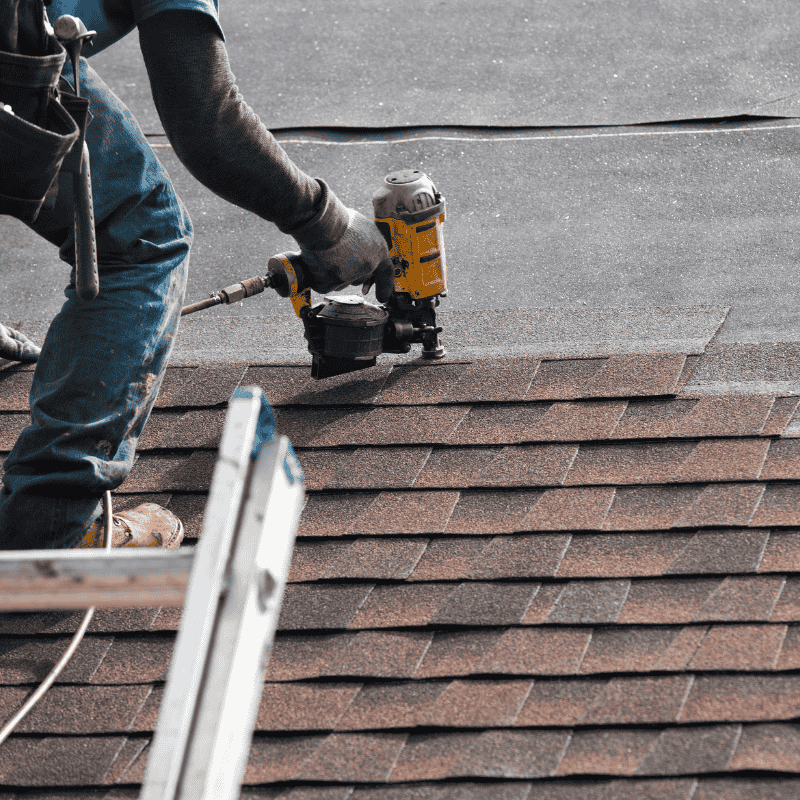
Question 2: How Long Have You Been a Roofing Company in NJ?
Experience does matter, but even more important than experience is longevity. Any contractor can hire a truck, put up a sign, and run for one season through a storm. You want a company that installs roofs and guarantees those roofs five or ten years later.
Find out how long the contractor has been operating in the area under the same business name. In New Jersey, different regions have different requirements for roof installation. For example, shore towns face wind-driven rain and salt air, whereas northern and central parts of New Jersey see snow loading and ice dams. A contractor experienced in your area will know all about the problem.
Question 3: Can You Provide Local References and Reviews?
There must be more than just testimonials to verify the legitimacy of your roof replacement contractor.
This can be done simply by:
Asking for two to three references of the last six months’ work done.
Looking into Google Business ratings and seeing how they deal with any criticism (because you learn a lot about the business from this).
Asking if you could visit one of the jobs they have done within your area recently.
It’s good to keep in mind that a business which avoids recent, local references is not a good sign.
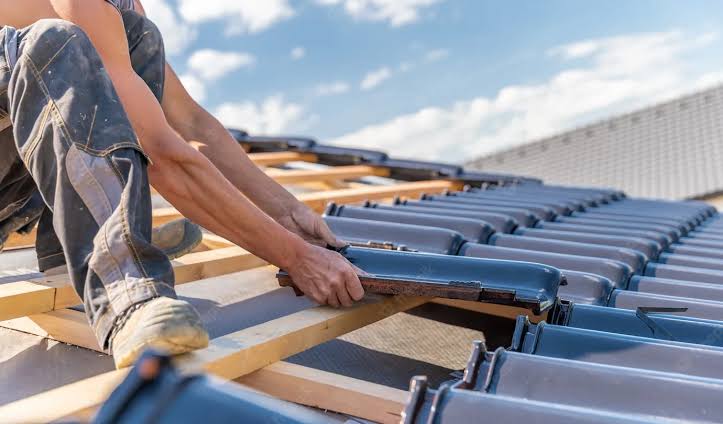
Question 4: What Does the Roofing Estimate Actually Include?
This is where a lot of homeowners get burned. Two roofing estimates that look similar on the surface can be wildly different once you read the fine print.
A detailed roofing estimate should clearly spell out:
|
Estimate Component |
What to Look For |
|
Materials |
Brand, shingle type, warranty class (architectural vs. 3-tab) |
|
Tear-off |
Number of layers removed, disposal method |
|
Decking/plywood |
Cost per sheet for any rot or damage found |
|
Underlayment |
Synthetic vs. felt, ice and water shield placement |
|
Flashing |
Chimney, valley, and vent flashing replacement |
|
Ventilation |
Ridge vents, soffit vents, attic airflow plan |
|
Labor |
Crew size, estimated timeline |
|
Cleanup |
Magnetic nail sweep, debris haul-away |
|
Warranty |
Manufacturer warranty + workmanship warranty |
Expert tip: Get at least two, ideally three, written estimates before deciding. Never choose based on the lowest number alone — ask what’s different between the bids and why.
Question 5: Do You Perform a Full Roof Inspection Before Quoting?
The quote given after a glance from your driveway is not an estimate; it is a guess. It takes a qualified roofer to go up on the roof, look at the attic, and then check the flashing points, valleys, and vents before coming up with any figure.
A good roof inspection should entail:
- Condition of the shingles (if curling, cracking, and loss of granules)
- Chimney, skylights, and vents flashing
- Proper attic ventilation and moisture or mold problem
- Decking condition (any softness, rotting, or sagging)
- Functionality of the gutters and drainage system
- Presence of any ice damming on the eaves
A contractor that is ready to give you an estimate without physically examining your roof should be a warning sign. Satellite tools may be helpful in getting a rough size of the roof, but they cannot spot soft decking or attic ventilation issues.
Question 6: What Roofing Materials Do You Recommend, and Why?
Every roof does not necessarily require the same method. An ethical roofing contractor will discuss the pros and cons and not simply sell the most expensive product.
Typical questions in this area would be:
- What brand and line of shingles do you install and why?
- What is the cost difference and durability difference between architectural and premium shingles?
- Is the installation of synthetic underlayment done as standard practice or is this an upgraded feature?
- How do you ensure proper application of ice and water shield for the NJ winter climate?
Expert advice: In New Jersey, the installation of ice and water shield along the eaves of the roof is not optional but essential in preventing ice dam backup in freeze/thaw cycles.
Question 7: What Roofing Warranties Do You Offer?
Roofing warranties have different levels and homeowners are often stunned to discover that there are actually two entirely different types of warranties:
Manufacturer’s warranty – provides protection against defective shingles or materials, usually lasting 25 to 50 years based on the specific brand.
Workmanship warranty – protects the homeowner from poor quality of installation performed by the roofing contractor, usually lasting 2 to 10 years but occasionally longer if you use a certified installer.
Asking specific questions:
- Is the workmanship warranty transferable when you sell your house?
- What will void the manufacturer’s warranty (typically bad ventilation or installation issues)?
- Are you a certified installer for the brand you quote?
Question 8: How Do You Handle Unexpected Issues Once the Roof Is Opened?
When the old roof is stripped away, there will often be rotting decking, hidden water damage, or old flashing that needs to be replaced. This is all perfectly fine and normal — but the way in which the contractor deals with it is what distinguishes the professional from the cheap contractor.
Ask up front:
- How much do you charge per sheet for replacing damaged decking?
- Will I be alerted with pictures before any other work is done?
- Is there an unexpected cost limit, or will it be wide open?
Question 9: What's the Realistic Timeline, and What Happens If It Rains?
Generally speaking, a roof replacement for a house takes anywhere from one to three days, depending on various factors such as the size and weather at the time of replacement. Find out what will happen if it starts to rain in the middle of the day.
Question 10: Do You Handle Permits and Cleanup?
Many New Jersey towns need a permit for a complete roof replacement. Your contractor needs to take care of all that, not you. You should also inquire about the following: magnetic nail sweeps of the lawn and driveway, dumpster location, and debris removal.
Pre-Hiring Checklist
Do the following before you put anything down in writing.
[ ] NJ Home Improvement Contractor license
[ ] Liability insurance & workers’ compensation insurance verification
[ ] At least two references or recent work in your area
[ ] Two or three estimates in writing
[ ] Full roof inspection vs. a drive by estimate
[ ] Both manufacturer’s warranty and workmanship warranty
[ ] How repairs will be paid for if they happen unexpectedly
[ ] Who takes care of permits and cleanup
Repair, Replace, or Inspect First? Know What You're Actually Asking For
In many cases, the property owner calls the contractor without really understanding what he needs. The following can help you determine this quickly:
- Roof Inspection – Ideal if you are not quite sure about the state of your roof, buying or selling a house, or having a leak with an unclear origin.
- Roof Repair Contractor – Ideal for isolated damages like storm damage, a couple of missing shingles, or a flashing leak near the chimney.
- Roof Replacement Contractor – Ideal if the life of your roof is almost coming to its end (20-25 years on average for asphalt shingles), the roof is damaged extensively, or you had many expensive repairs.
If you cannot define in which of these categories you belong, a reputable contractor will give you the honest answer, including informing you about the fact that all you need is repair, even if it means much less profit for him.
Winter-Specific Questions New Jersey Homeowners Should Ask
Freezing and thawing conditions in New Jersey make for some unique challenges when it comes to roofs that other regions never have to consider. Two questions worth considering:
Ice dams: Make sure to inquire about the contractor’s approach to ice dam prevention rather than just remediation. Properly insulated and ventilated attics as well as ice and water shield installation will decrease the likelihood of ice dams occurring.
Yankee gutters: Old houses in New Jersey, particularly historical areas, may have Yankee gutters that are built into the roof as opposed to the hanging gutters. Yankee gutters require specific repairs and not every roofing company can do them.
Red Flags That Should End the Conversation
- Requires upfront payment before doing anything
- Convinces you to sign on the spot, especially if you’ve had storm damage
- Does not have a legitimate business address or local phone number
- Will not put the details of your warranty in writing
- Gives you a quote that is much lower than anyone else’s without an explanation
- Uninvitedly stops by after a storm and offers a free inspection
Final Thoughts
In order to hire the correct roofer in New Jersey, you should be able to ask pertinent questions and have those questions answered confidently. An honest contractor will answer your questions without batting an eye at them.
Take your time in deciding on your choice, review estimates and license, and do not allow yourself to be hurried into making an important decision that will literally hang over your head for the next two decades.
If you are considering having a roof repair done now or if you are in the market for a new roof or even just need a professional opinion of what shape your roof is in before the winter season comes around, then R&G Home Services will give you the information you need about your roof.
How much is a new roof installation in NJ?
The cost of a roof replacement varies significantly depending on the roof dimensions, the pitch of the roof, materials, and the condition of the decking under the roof, but in New Jersey, most homeowners would face costs that reflect the quality of materials and labor difficulty, but never a flat rate. The only thing you can do to find out your exact cost is getting a detailed, itemized estimate.
How many days does a roof replacement last?
Roof replacement in NJ takes one to three days on average for an average-sized house, depending on the weather conditions. More complicated or large roofs might take more days to install.
Is it possible to stay in the house during a roof replacement?
Yes, you are able to stay in the house during the roof replacement, although it will be rather noisy and there will be vibrations. Pets may prefer staying away from the house during this process due to noise.
Will my roof repair or replacement be paid off by the home insurance?
It will depend on the reason for the damage. If it is caused by storm, wind, or hail, your insurance will pay it. On the other hand, normal wear or aging are not covered.
When can I understand that it is time for roof replacement or repair?
When can I understand that it is time for roof replacement or repair? When the damage is isolated and the roof is still structurally sound, you might consider just repairing. However, when the roof is close to its life expectancy, it is losing granules, or there are many repairs, it is better to go with roof replacement.
When should I schedule a roof replacement?
The optimal period to install the roof is late spring to early fall. However, good contractors can install your roof any time of the year, including winter, as long as temperatures allow proper sealing of shingles.
