


What Homeowners Actually Pay: Average Roof Replacement Cost in New Jersey
Getting a new roof is probably the most expensive thing any NJ homeowner will pay for their property at some point in time. It is unlike painting your kid’s room or changing the kitchen faucet. Once you let the work begin, the whole deal gets done, and the cost is determined by a wide array of factors that homeowners normally never think of.
If you have been looking for roof replacement contractors’ prices, you definitely realize how puzzling those prices might be – $9,000 here and $19,000 there. Both numbers refer to the same house on the same street, but still, they differ considerably. The difference normally depends on the roof size, material used, workmanship, and other aspects related to what lies under the shingles and cannot be seen from the driveway.
The current guide provides the real data regarding roof replacement cost per square foot, by material, by home size, and other hidden parameters that make roofing prices increase or decrease. The data was obtained through many years of experience with roof replacements in Essex County and northern New Jersey by the certified contractor, R&G Roofing, Carpentry & Siding, which has a reputation of a GAF Master Elite® company with over 25 years of experience in roof installation.
Average Roof Replacement Cost in New Jersey
In New Jersey, ranging from North to Central New Jersey, the roof replacement of asphalt shingles is usually priced anywhere from $8,500 to $22,000, with an average of around $13,500 to $15,000 for a medium-sized home with architectural shingles. Houses with steep roof pitch, removal of more than one layer of old roof, and other factors can cost well above this average range.
Based on the square footage, homeowners will usually pay around $4.50 to $9.00 per square foot of roof installation. Roofing contractors often charge their rates based on “rooftop squares” rather than per square foot, meaning that one rooftop square is equivalent to 100 square feet, so the estimated rates are usually quoted at $450 to $900 per square.
|
Roofing Metric |
Typical NJ Range (2026) |
|
Average total project cost |
$8,500 – $22,000+ |
|
Statewide average (mid-size home) |
$13,500 – $15,000 |
|
Cost per square foot |
$4.50 – $9.00 |
|
Cost per roofing square |
$450 – $900 |
|
Tear-off & disposal (single layer) |
$1.00 – $2.00 per sq ft |
|
Tear-off & disposal (multiple layers) |
$2.00 – $3.50 per sq ft |
These numbers assume a straightforward asphalt or architectural shingle replacement. Metal, slate, and tile roofing sit in a different pricing tier, which we’ll break down below.
Roof Replacement Cost Per Square Foot
Material choice has the single biggest impact on price per square foot. Here’s how the most common roofing materials compare for New Jersey installations.
|
Material |
Cost Per Sq Ft (Installed) |
Cost Per Square |
Typical Lifespan |
|
3-Tab Asphalt Shingles |
$3.50 – $5.50 |
$350 – $550 |
15–20 years |
|
Architectural Shingles |
$4.50 – $7.50 |
$450 – $750 |
25–30 years |
|
Metal Roofing (standing seam) |
$8.00 – $14.00 |
$800 – $1,400 |
40–60 years |
|
Slate Roofing |
$15.00 – $30.00 |
$1,500 – $3,000 |
75–100+ years |
|
Cedar Shake |
$9.00 – $15.00 |
$900 – $1,500 |
25–35 years |
|
Tile Roofing |
$10.00 – $20.00 |
$1,000 – $2,000 |
50+ years |
|
Flat Roof (TPO/EPDM/Modified Bitumen) |
$5.00 – $10.00 |
$500 – $1,000 |
20–30 years |
The cost of architectural shingles is often found to be just right by many homeowners in Essex County. The initial price may be higher compared to 3-tab shingles, but the durability of architectural shingles can handle freezing and thawing weather conditions in New Jersey.
Roof Replacement Cost by Home Size
Square footage of homes and roofs are different things. Roof pitch, overhangs, dormers, and roof shape create additional area that is not included in the square footage of your house. If you have a high-pitch roof for a 2,000 sq ft house, the roof could be 30-50% bigger than a flat one.
So, here are rough estimates based on architectural shingles, taking into consideration average pitch and medium difficulty level of the roofs.
|
Home Size |
Estimated Roof Area |
Asphalt/Architectural Cost Range |
|
1,000 sq ft |
~1,200–1,400 sq ft |
$6,500 – $9,500 |
|
1,200 sq ft |
~1,450–1,700 sq ft |
$7,500 – $11,000 |
|
1,500 sq ft |
~1,800–2,100 sq ft |
$9,000 – $13,500 |
|
1,800 sq ft |
~2,150–2,500 sq ft |
$10,500 – $16,000 |
|
2,000 sq ft |
~2,400–2,800 sq ft |
$12,000 – $18,000 |
|
2,500 sq ft |
~3,000–3,500 sq ft |
$15,000 – $22,000 |
|
3,000 sq ft |
~3,600–4,200 sq ft |
$18,000 – $27,000 |
|
3,500 sq ft |
~4,200–4,900 sq ft |
$21,000 – $32,000 |
|
4,000 sq ft |
~4,800–5,600 sq ft |
$24,000 – $37,000 |
The above prices are based on one layer being stripped without extensive repair work to the deck. Your roof may consist of several layers of shingles, wet or rotted plywood, or have a complicated shape with several valleys and dormers.
Roof Replacement Cost by Roofing Material
Asphalt Shingles
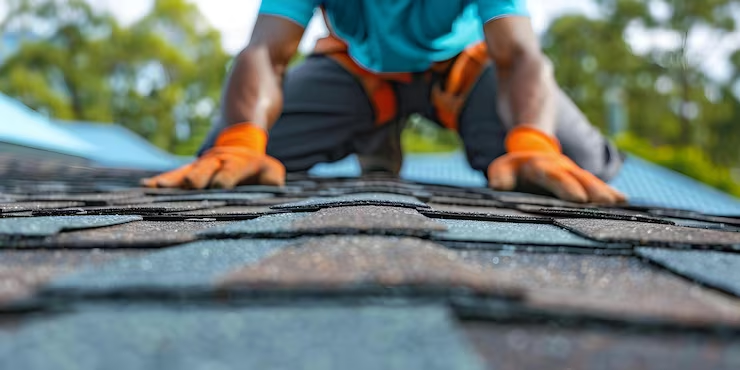
Advantages: Reasonably priced, easy to acquire, quick to install, many color options. Disadvantages: Shorter lifespan compared to quality roof coverings, easier to remove by wind. Lifespan: 15-20 years. Maintenance: Minimum maintenance needed. Periodic check after storms. Average cost of installation: $3.50 – $5.50 per sq ft. Ideal use cases: Economical homeowners, rented housing, houses sold within 10-15 years.
Architectural Shingles
Advantages: Durable construction, strong wind protection, attractive visual effect increases appeal. Disadvantages: High initial cost compared to three-tab shingles. Lifespan: 25-30 years. Maintenance: Low level of care needed; debris clearance and gutters checks. Average cost of installation: $4.50 – $7.50 per sq ft. Ideal use cases: Long-term homeowners, those who want to get the best compromise between cost and lifespan.
Metal Roofing
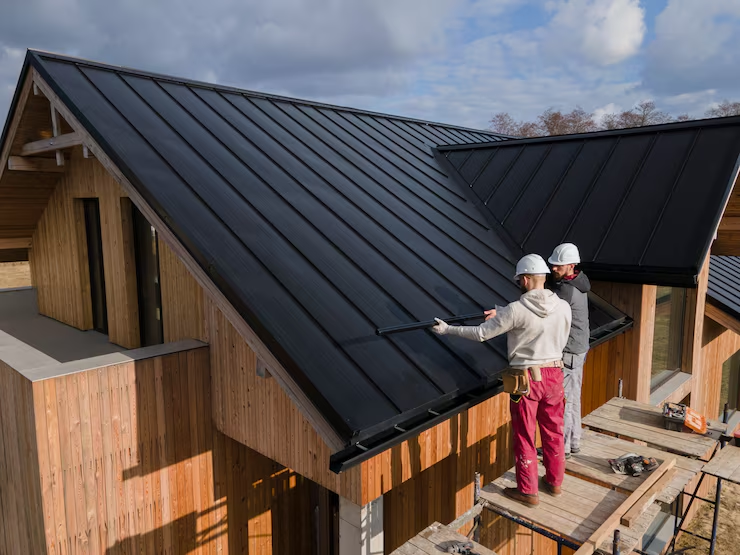
Advantages: Long lifespan, energy efficient, fire resistant, durable in winter. Disadvantages: Relatively high price, installation requires professional knowledge. Lifespan: 40-60 years. Maintenance: Very low. Average cost of installation: $8.00 – $14.00 per sq ft. Ideal use cases: Long-term homeowners, people who want to reduce energy expenses.
Slate
Advantages: Extraordinary long lifespan, beautiful natural appearance, fire-resistant. Disadvantages: Heavy (might require additional support), very expensive, installation requires specialist. Lifespan: 75-100 years or even more. Maintenance: Low but repairs need specialist in slates. Average cost of installation: $15.00 – $30.00 per sq ft. Ideal use cases: Historic homes, high-end housing, long term homeowners.
Cedar Shake
Advantages: Naturally looking, good insulator. Disadvantages: Needs regular maintenance, highly flammable without treating, absorbs moisture easily. Lifespan: 25-35 years. Maintenance: Moderate maintenance is needed. Treating to resist mold and pests. Average cost of installation: $9.00 – $15.00 per sq ft. Ideal use cases: Homeowners preferring unique natural appearance in dry and ventilated area.
Tile Roofing
Advantages: Durable, good lifespan, distinctive appearance. Disadvantages: Very heavy, very expensive, requires structural assessment prior to installation. Lifespan: 50+ years. Maintenance: Low; repair after impact damage. Average cost of installation: $10.00 – $20.00 per sq ft. Ideal use cases: Homes with reinforced framing, homes with Mediterranean or Spanish architecture.
Flat Roof
Advantages: Economical for addition, garage roofs, low slope area. Good surface for installing solar panels. Disadvantages: Shorter lifespan than peaked roofing, might be more prone to ponding if installed incorrectly. Lifespan: 20-30 years depending on membrane. Maintenance: Moderate; drainage inspection regularly. Average cost of installation: $5.00 – $10.00 per sq ft. Ideal use cases: Addition, commercial building, row home, modern style.
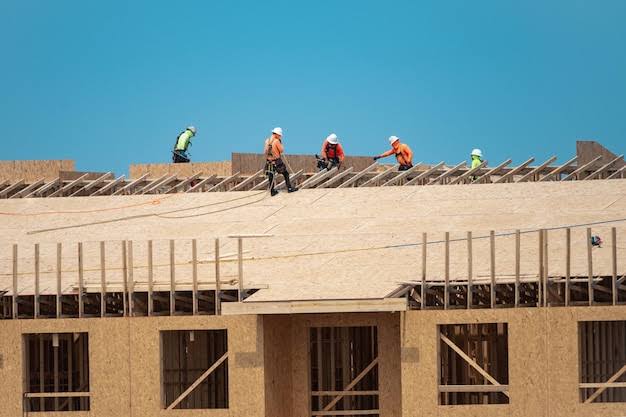
What Affects Roof Replacement Cost in New Jersey?
Every estimate is shaped by a combination of these factors:
- Roof size — More surface area means more material and labor hours.
- Roof pitch — Steep roofs require additional safety equipment and slow down installation.
- Roof accessibility — Roofs surrounded by landscaping, fencing, or tight side yards make material staging harder.
- Material — As shown above, material selection is the biggest cost driver.
- Underlayment — Synthetic underlayment and ice-and-water shield add cost but are essential in New Jersey’s winter climate.
- Roof decking damage — Rotted plywood found during tear-off means additional material and labor to replace it.
- Labor — Crew experience, crew size, and local labor rates all factor in.
- Permits — Most New Jersey municipalities require a roofing permit, which adds a line item to your estimate.
- Waste disposal — Dumpster rental and disposal fees vary by town and by how many layers are removed.
- Flashing — New flashing around chimneys, walls, and valleys prevents leaks and adds to material cost.
- Ventilation — Ridge vents, soffit vents, and proper attic airflow protect the new roof and may require upgrades.
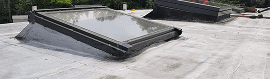
- Skylights — Reflashing or replacing skylights adds both material and labor cost.
- Chimneys — Chimney flashing and masonry condition can affect scope of work.
- Season — Spring and fall are peak demand seasons; winter and off-season scheduling can sometimes be more cost-effective.
- Weather — Rain delays and temperature restrictions for certain materials can affect scheduling and cost.
- Emergency replacement — Storm-related emergency work often carries a premium due to urgency and material availability.
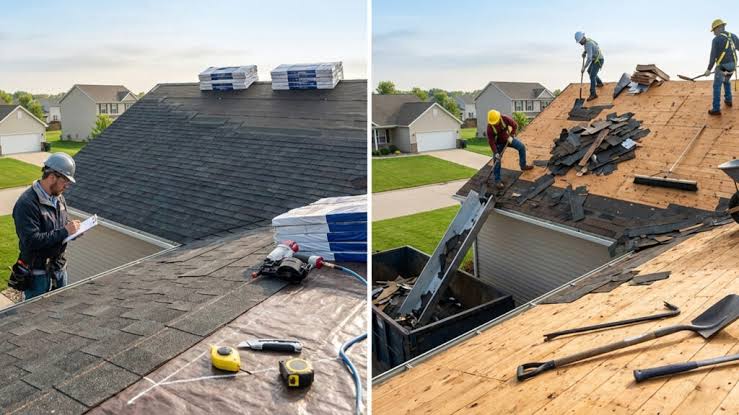
Roof Tear-Off vs Roof Overlay
|
Factor |
Full Tear-Off |
Overlay (Roof-Over) |
|
Cost |
Higher upfront |
Lower upfront |
|
Inspects decking |
Yes |
No |
|
Lifespan of new roof |
Full expected lifespan |
Reduced, often 10–15 years |
|
Weight on structure |
Standard |
Added weight from extra layer |
|
Warranty eligibility |
Full manufacturer warranty |
Often limited or voided |
|
Best for |
Homes with decking issues, long-term ownership |
Short-term budget fixes only |
The overlay appears cheap, but it actually conceals the status of your deck and reduces the life of your newly installed shingles. The majority of towns in New Jersey do not permit more than two layers of shingles on their roofs due to regulations. Therefore, if you have one layer of shingles, it becomes mandatory for you to get your roof torn off. The choice becomes clear for those who intend to remain in their homes for many years.
Labor Costs
The percentage of labor cost for replacing a roof ranges from 35% to 50% in New Jersey, depending on how complex the roof system is. The average rate for hiring experienced crews for labor is $45 to $75 per hour per employee; however, most labor costs are embedded in the entire project, not hourly.
Generally, experienced contractors charge higher rates than less experienced ones per square, and such differences make sense because they include appropriate flashing, proper nailing, proper ventilation, and installation according to manufacturers’ instructions to maintain warranties. Inexperienced crews may install roofs improperly, causing them to leak, fail prematurely, or render warranties null and void, thereby creating greater repair costs in the future than those saved initially.
Signs You Need a Roof Replacement
Leaks – Consistent leaks in the same place, even after repairs, may indicate that it is time to install a new roof rather than fix.
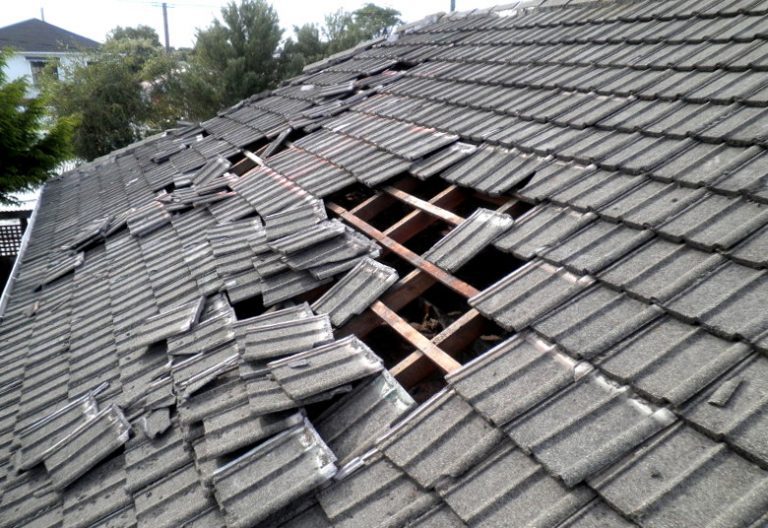
Missing shingles – A homeowner living in Bloomfield observed that there were three shingles that had been blown away by a storm. On inspection, it turned out that all other shingles around those were brittle and broken.
Curling shingles – When you see that the edges of the shingles start curling or cupping, this indicates that the material has become inflexible.
Granule loss – You can tell that the shingles have started deteriorating when you find granules accumulating in the gutters and downspouts.
Sagging – Any sagging in the roof is a serious problem that needs to be looked into immediately.
Storm damage – Hail bruises, wind-lifted shingles, or falling branches from trees during storms may put the integrity of the entire roofing system at stake.
Mold – Dark spots or mold growing on the roof surface and the attic usually occur due to moisture.
Water stains – Stains on the ceiling of the house indicate that the roof is leaking.
Age – Roof reaching or exceeding its life span requires a professional evaluation even in case of no apparent problems.
Poor ventilation – Hot and damp attic speeds up the process of deterioration of shingles from below.
Roof Repair vs Roof Replacement
|
Situation |
Repair |
Replacement |
|
Roof under 10 years old with isolated damage |
Yes |
Not usually needed |
|
Roof over 20 years old with widespread wear |
Rarely sufficient |
Recommended |
|
One or two leaks, localized |
Yes |
Not usually needed |
|
Multiple leaks across different areas |
No |
Recommended |
|
Missing shingles in one section only |
Yes |
Not usually needed |
|
Granule loss across most of the roof |
No |
Recommended |
|
Storm damage limited to a small area |
Yes |
Depends on insurance and age |
Repairing your roof makes sense if the damage is confined to a small area, your roof is not too old, and the sheathing underneath your roof is in good condition. The better option will be to replace your roof if you are constantly repairing it, your roof is nearing the end of its usable life, or the damage is widespread.
Does Homeowners Insurance Cover Roof Replacement?
Roof replacement coverage is provided by most homeowner’s insurance in New Jersey when the damage is caused by a covered peril that includes:
Storm damage – Storms, including hurricanes and strong winds, are usually covered.
Winds – Damage due to wind and loss of shingles is the most common type of claim in New Jersey.
Hail damage – If you have hail bruise or punctures, it is usually covered, but you need to act fast.
Damage from trees – The damage caused by a fallen tree or a branch from it onto your roof will be covered.
Age – Roof damage because of wear-and-tear due to age is not covered.
The claim process involves first taking pictures of the damage, informing your insurer, and making an insurance inspection appointment. Most people hire a professional roofer to help with the documentation of the claim, as the inspector may miss some points.
Why Choosing the Right Roofing Contractor Matters
But not all roof estimates are the same just because of the identical price. Check:
Licensing – Make sure that a contractor is licensed in New Jersey.
Insurance – Liability insurance and workers’ compensation will cover your property in case of an accident.
Experience – An experienced contractor has dealt with many more types of roofs than a new one.
Manufacturer certifications – GAF Master Elite® certifications mean that a contractor meets high standards of training, reliability and services.
Workmanship warranty – Quality workmanship guarantee, distinct from the material warranty, means that a contractor guarantees its installation.
Reviews – Reviews about the company give insight into what kind of contractor it is.
Transparent estimates – An itemized estimate means a transparent contractor.
R&G Roofing has gained its reputation by following these criteria and being a holder of GAF Master Elite® certification, an honor that less than 1% of roofing contractors in the country have.
Why Homeowners Across Northern New Jersey Choose R&G Roofing
R&G Roofing, Carpentry & Siding is the name that home owners have come to trust in the regions of Northern New Jersey and Essex County. Why? Their workmanship is always guaranteed and will stand up to the test of time. Over two decades of actual roofing experience mean that they can do anything from a normal roof replacement for a residential home to complicated roofs that have many layers in older houses.
With their status of GAF Master Elite® Contractor, you can be sure that they use materials that guarantee the best warranty of any manufacturer. They are fully insured and licensed and provide you with clear and detailed estimates of their services, not those “ballpark” ones, where you don’t really know how much you have to pay. If you need a roofing contractor that would be there to help you with any warranty problems in ten years’ time, choose them.
Roof replacement cost NJ – how much does it cost?
The most common range of prices for the roof replacement cost in NJ for most New Jersey property owners is $8,500 to $22,000, while the statewide average price for a mid-sized house is $13,500 to $15,000. However, the exact price would depend on roof dimensions, its slope, chosen material, and the necessity to repair the decking when removing the old roofing system.
What is the average cost of roof replacement per square foot?
Replacement of a residential roof in NJ costs $4.50 to $9.00 per square foot of installed roofing. High-end materials such as metal, slate, or tile have an increased roof replacement cost per square foot ranging from $15 up to $30 for premium slate roofing.
How long does it take to replace a roof?
It takes from one to three days on average to perform a complete residential roof replacement job in New Jersey. However, depending on roof dimensions, its slope, and weather conditions, some projects may last up to four or five days.
Is it possible to finance my roof replacement?
Financing is available for the most homeowners through reputable companies that provide roofing services, such as R&G Roofing Company. Thus, you can afford to use more durable materials for your roof replacement, for example, architectural shingles and metal roofing.
Which roofing material will last the longest?
The longest-lasting materials include slate and tile roofing that can survive up to 50 to 100 years with proper maintenance. Other roofing materials include metal roofing lasting 40 to 60 years and architectural shingles lasting 25 to 30 years.
How often do roofs require replacement?
On average, asphalt and architectural shingles require replacement after 20 to 30 years of use. In addition, some factors could affect this time period. For example, severe weather, insufficient ventilation, and multiple storms could decrease your roof’s lifetime by several years.
